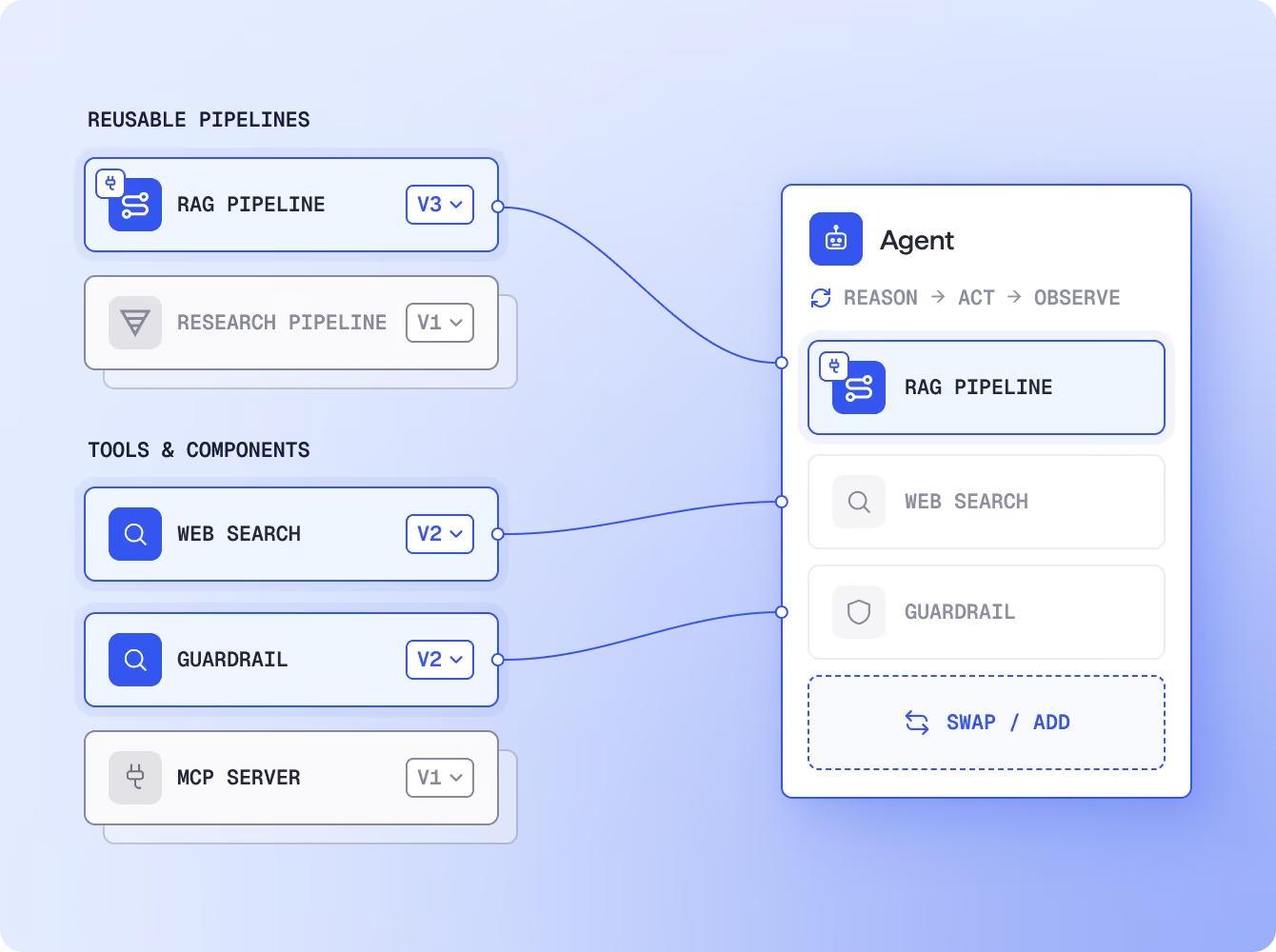

Put your energy knowledge to work.
Across Oil, Energy & Utilities
Build AI applications around technical documents, operating procedures and service knowledge. Start with a defined workflow, connect approved sources and evaluate answers with the people who know the work.
Your sources. Your evaluation. Your rollout decision.
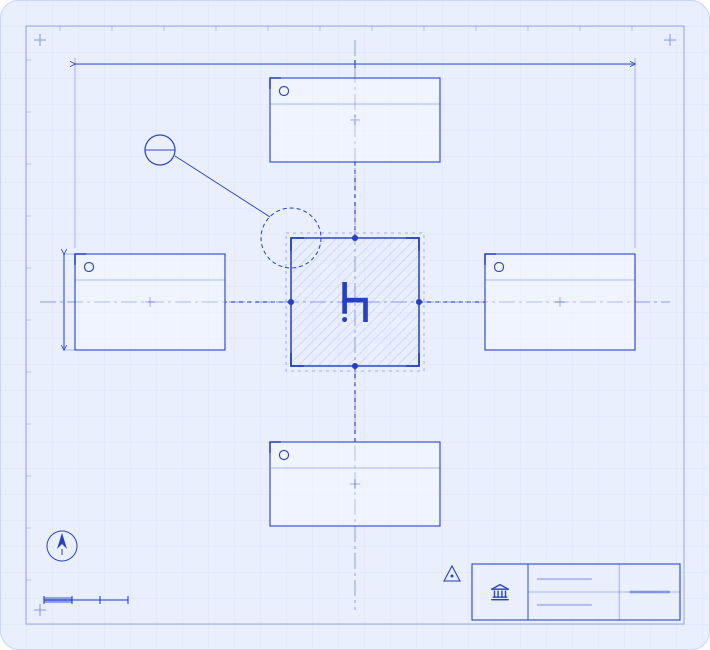
Oil and gas operations
Build assistants for technical reports, engineering procedures and asset records. Help specialists find supporting information while keeping technical decisions with qualified people.
Power generation and networks
Connect maintenance manuals, operating guidance and internal standards. Evaluate answers with domain experts before extending access across sites and teams.
Energy retail and service teams
Build assistance for service requests, internal policies and customer documents. Define source access and human review for sensitive decisions.
Sovereignty first. Cost and performance in your hands.
Your energy knowledge. Your AI. Your control.
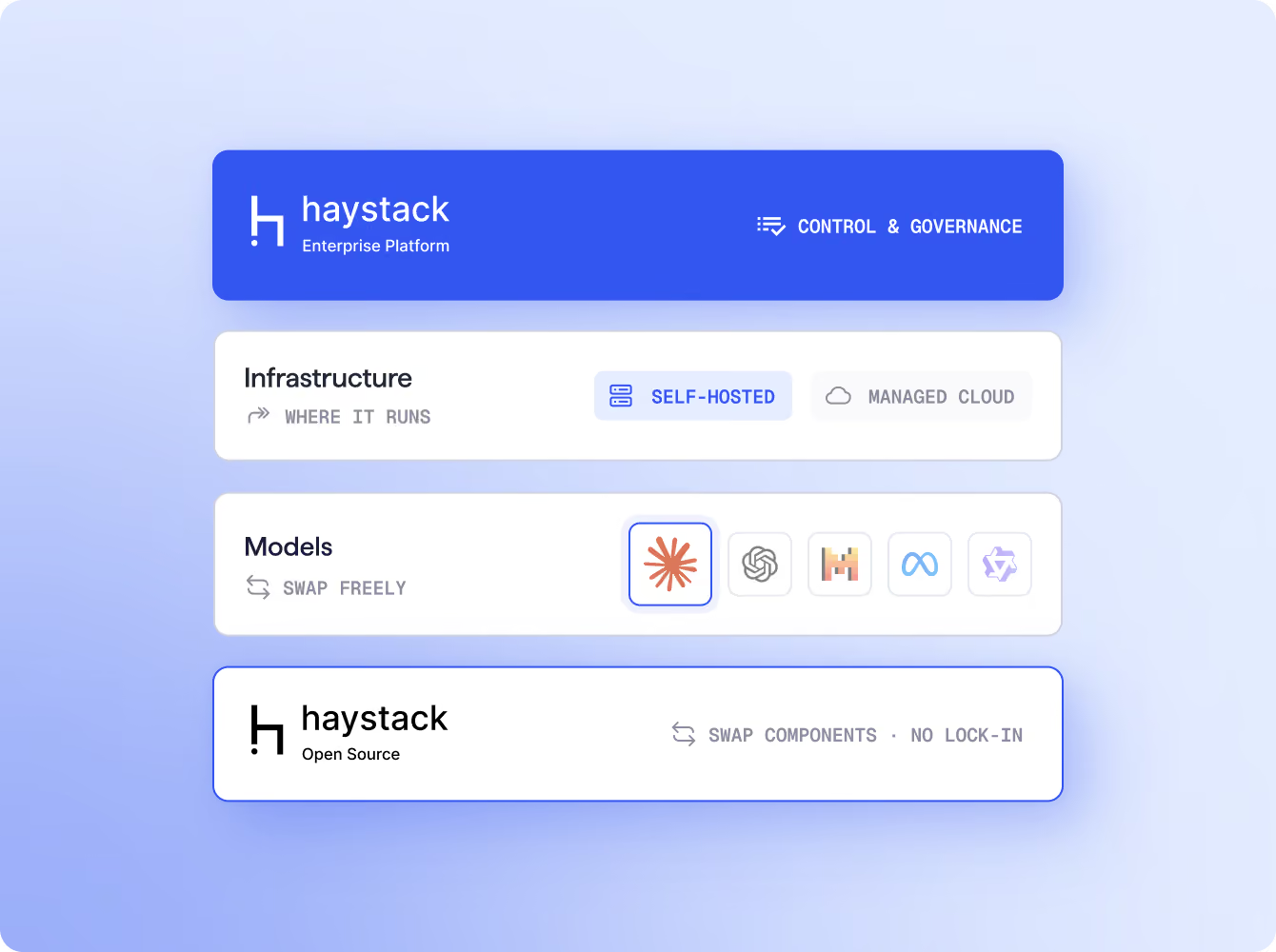
Decide where AI applications run, which models they call and who operates your infrastructure. Build on your company knowledge with deployment choices that fit your data and sovereignty requirements.
Choose your infrastructure
Self-host in your private cloud or on premises. Air-gapped deployments use models and services hosted inside your network.
Keep your model choices open
Select the models your applications call and change providers as requirements evolve. Configure external connections to fit your data requirements.
Control more than data location
Consider who operates your infrastructure and which jurisdictions apply. Review access, data flows and model-provider terms alongside residency.
Control AI costs, task by task.
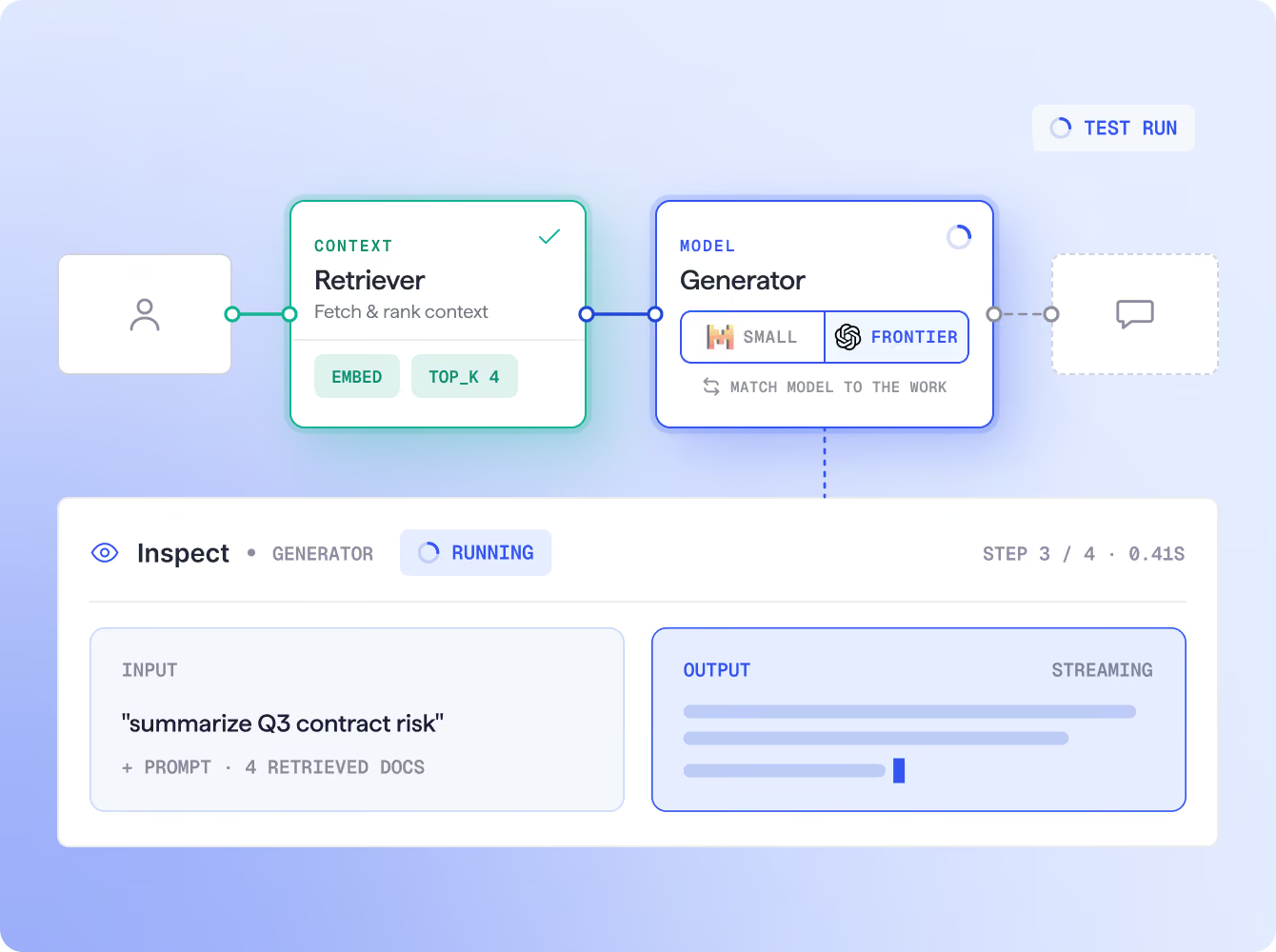
Classifying service requests and comparing technical reports ask different things of AI. Match models to the task, evaluate quality and running cost, and keep the freedom to change models and deployment choices.
Match models to the work
Build task-specific routes for different requests. Evaluate candidate models on representative questions before choosing a route.
Measure quality and total cost
Compare answer quality, usage, retries and infrastructure cost. Lower model pricing alone does not establish lower total cost.
Keep sovereignty part of the choice
Retain control over models and deployment. Change providers as requirements evolve, using the same pipeline framework.
Scale AI across teams. Keep control.
Extend useful knowledge applications across engineering, operations and service teams. Evaluate performance as demand grows while retaining control over data, access, models and deployment.
Evaluate answers and performance
Test source relevance and answer quality with domain experts. Inspect traces, response times and failures as usage grows.
Plan capacity for demand
Managed-cloud capacity scales with traffic within configured limits. Test peak demand and model-provider limits before expanding access.
Keep control as you expand
Choose where applications run and which models they use. Reuse components while adapting sources and access to each team's requirements.