
TLDR
Key Metrics:
More and more, the people you build for – analysts, operators, employees across your organization – work inside AI clients like ChatGPT, Claude, and Cursor, querying data and pulling in context without switching tools.
The pipelines you build on Haystack encode what's specific to your organization: your data, your retrieval logic, your agentic workflows. That’s mission critical work, and it pays off only when people actually use what you've built. Adoption depends on reach: getting those pipelines in front of users has typically meant building to each assistant's interface, one integration at a time. The Model Context Protocol changes that – an open standard for connecting AI assistants to external tools and data, so a capability exposes once and works across any MCP-compatible client.
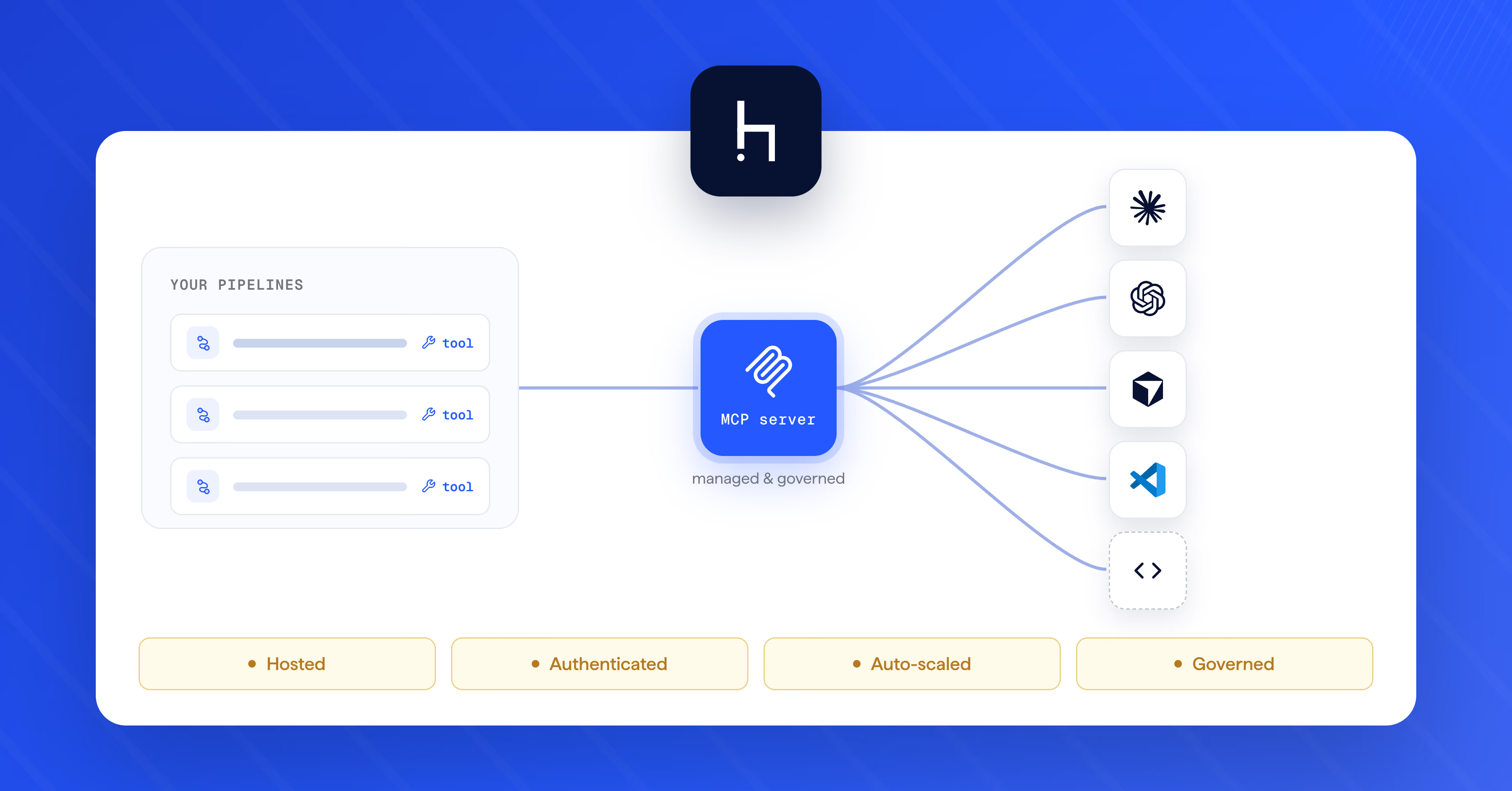
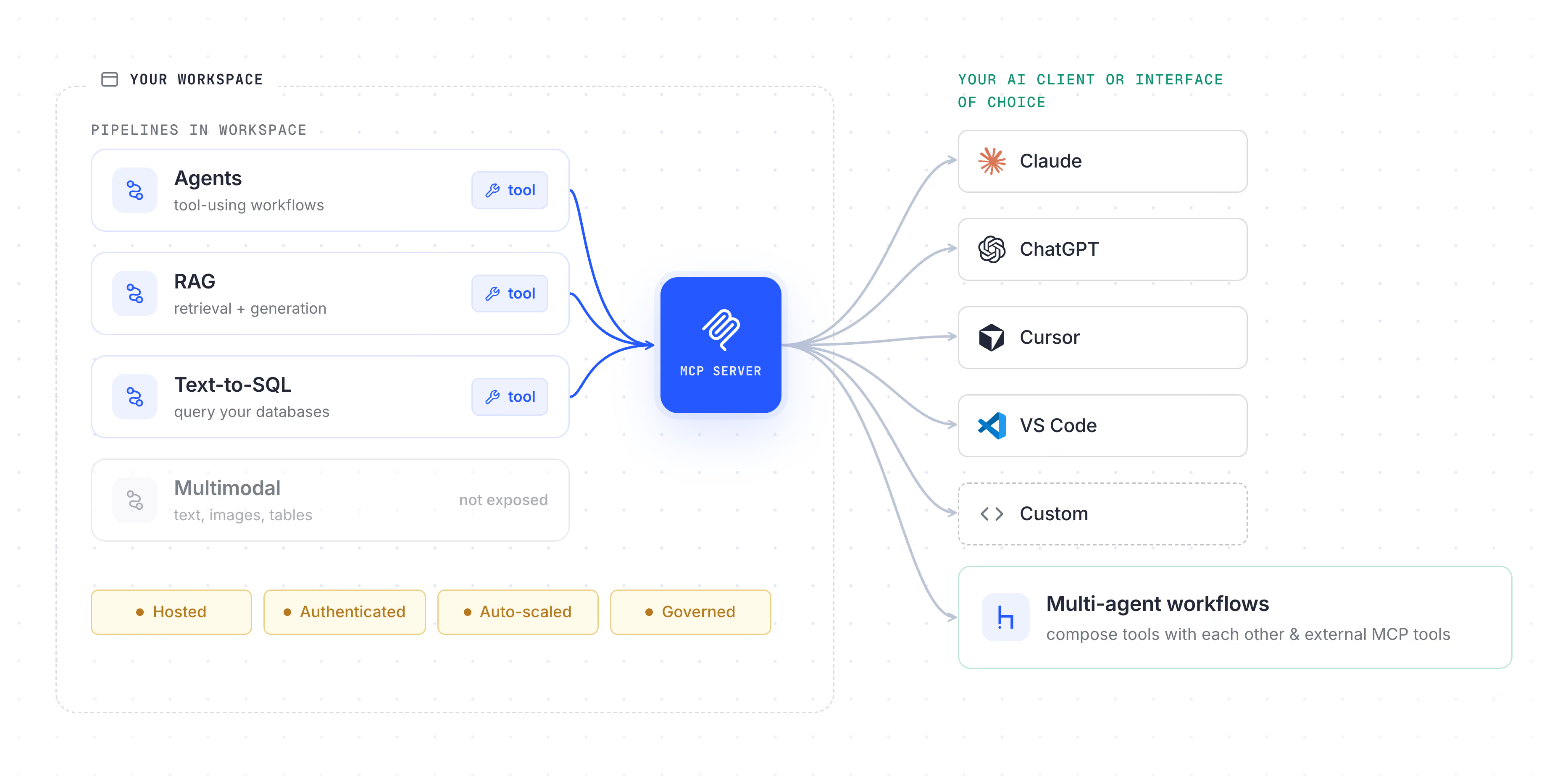
Today, we're adding MCP support to the Haystack Enterprise Platform. Any pipeline becomes a managed MCP tool. The platform hosts and runs the MCP server, handles scaling and authentication, and keeps it live, so you expose a pipeline once and use it without operating any infrastructure. The result: the pipelines you’ve invested in show up where people work.
How teams are using MCP in Haystack Enterprise Platform
With MCP, pipelines are now callable, managed tools. They can be used on their own or composed with others. Here's what that looks like in practice.
Compose multi-step agent workflows. A single agentic flow can pull data from your Haystack pipeline, hand off to a live web-context tool for current information, and route through another pipeline for structured output. The agent calls each pipeline as it is, chaining your pipelines with each other and with external MCP tools, instead of re-implementing that logic inside the agent.
Bring internal knowledge into everyday tools. Your Haystack RAG and agentic pipelines answer questions and complete tasks from inside the assistants people already work in – grounded in your organization's own data, with no new interface to adopt. A single pipeline, exposed once, is useful on its own.
Extend pipelines beyond internal use. Pipelines exposed as tools can serve partners or power external-facing experiences – including productizing a pipeline as an offering customers pay to access.
Why run this on the Haystack Enterprise Platform
Production MCP tools need governance and infrastructure behind them. The platform handles all of it, so your pipelines run as MCP tools without standing up extra services.
Access you control. You decide which pipelines are exposed as MCP tools and can turn that access on or off at any time. Authentication and usage tracking run through the platform rather than bolted-on services.
Managed infrastructure. MCP endpoints are fully managed – no servers to deploy or host, automatic scaling and availability, and client configuration generated for you from the platform UI.
Observability built in. Every MCP invocation is treated as a standard pipeline execution, so you get the same structured logs and usage metrics as any other run, even when pipelines are called from outside the platform.
Get started with MCP
MCP support is available now in the Haystack Enterprise Platform:
- Build your pipeline in Haystack
- Expose it as an MCP tool from the platform
- Connect an MCP client using the generated configuration
- Call the pipeline directly, or let an agent compose it with other tools
Want to learn more? Talk to us or read the documentation to start exposing your pipelines via MCP.
Curious about building AI Apps and Agents?
meet the author

Table of Contents

.png)